

Past Editorials
Click here!
|
|
|
May 13, 2002
Past Editorials Click here! |
|
Home |
Alumni |
Home |
City Hall |
Events |
History |
Schools |
Map |
Library |
Stories |
Genealogy
Community Center | News | Chatter box | Email | Photos | Satire | About Minonk | Issues |
|
About Town Dave Uphoff 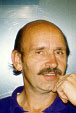 |
This past week I published a picture of the 1946 Minonk town baseball team.
It showed a picture of young Minonk men who had just returned from World War II and were getting back
into normal. In those days, a normal life for a young man was to play baseball during the summer. Baseball
was an important part of life for Minonk residents years ago. My Uncle Bill VonBehren, who died at age 101 in
1996 used to regale me with baseball stories from the past. In his day, men would get together every Sunday
after a hard week's work of being in the field and play baseball against each other. Many times they
would literally play in cow pastures.
A cow pasture was probably a better place for baseball than Sutton's Park was years ago. The picture of the 1946 Minonk baseball team was taken at Sutton's Park with the old Minonk Jumbo in the background. Today when someone mentions Sutton's Park they think of the land running along the east side of Chestnut Street north from Eighth Street all the way to the north curve. However, 40 years ago Sutton's Park was a baseball diamond located at the end of Oak Street right south of the old Minonk Jumbo. I played baseball at Sutton's Park back in the 50's and early 60's. The diamond was covered with cinders from the coal mine that was located immediately north of the diamond. Even those old heavy wool baseball uniforms would tear easily when you slid into a base because of the cinders on the diamond. You could almost see sparks when someone slid into homeplate. Beyond right field was the old claypit which was a water hole dug many years ago for the brick factory that was located on the sight. In other words, this location was not exactly designed for baseball. Nevertheless, the diamond had its own attraction with the coal mine slag pile called the Jumbo being the backdrop for left field. It imparted the same distinctive charm as the ivy on the outfield walls of Wrigley Field with its reddish color being a good background to highlight the white baseball coming at you at 80 mph. The park itself was not maintained by the city but was taken care of by the teams that played there. I remember when I played on the 1956 American Legion team that the manager Bob (Bird) Ketchmark had to get his uncle Ernie Feken's tractor mower to mow the outfield before a game. My team mates and I had a lot of fun playing out at Sutton's Park. The infield was full of bumps and potholes but we managed to play the bounces on the ball. It was good practice for when you went to play on a good infield. I remember playing at Washburn's ball diamond which was the only one I can remember that had a grass infield like the majors. You felt like you were in the majors when you played there. That is until the wind came from the east which would blow in the aroma from the hog pens right beyond right field.
|
The high school team also played baseball at Sutton's Park in the 50's. We
would walk from the high school to Sutton's Park which
was about a half mile. There were no buses to give us a ride to and from the park.
The outfield at Sutton's Park contained an awful lot of holes. You had to be real nimble footed to play the outfield. One of my more amusing memories is of our right fielder who tried to field a high fly ball in the sun during a game. He frantically skipped around in a circle trying to draw a bead on the ball high in the sky. Eventually, the ball came down right in the middle of the circle he was traversing trying to find the ball. Gail Cullen, who was the pitcher on our team, was so exasperated that instead of crying he started laughing right on the mound at the comical error. It seems that infield chatter is no longer practiced during ball games. Infield chatter consisted of the infielders chattering gibberish just to try to break the concentration of the opposing team's batter. We would say things like "Stick it in his ear", or "Hum babe, hum babe". Nobody remembers where these ridiculous chants came from. We just learned it from the older guys who played before us. Now days, the players seem almost mute when they play ball. I always wondered why and when infield chatter ceased in baseball. Sutton's Park is now the site of a storage shed and a trailer park. In 1960 baseball teams started playing at Veterans Park next to the cemetery. In 1990 the old Minonk Jumbo was razed removing the last vestige of the old baseball park. I played on the last of Minonk's town baseball teams in the early 1960's. John Timmerman was the manager. We used to play the different towns in the area every Sunday. Ted Jurzak usually umpired behind the plate while Joe Kasha and John Lohr would umpire the bases. One time "Hoople" Janssen was umpiring behind the plate and called a pitch "strrr-aall" in an attempt to change his mind in midspeech. One of our most faithful spectators was Rinky Baker. Rinky was deaf and worked for Suttons Bros. as a handyman and always seemed to be by himself. Other than Rinky, not many would come to watch us play. But we all enjoyed playing, nevertheless, and had great comradery. We played because we loved the game, not because we wanted to make money at it. I still think this is the true game of baseball - the gathering of friends to while away a pleasant Sunday afternoon, thrilling to the crack of bat against ball hoping to hit the next pitch over the center fielder's head. I am sure that those young men on the 1946 baseball team returning from the battle front of World War II knew exactly what I am talking about. |
| To reply to this editorial please send your comments to duphoff@minonktalk.com. Your letter will be published in the email section. Viewers are welcome to submit a guest editorial. |

